Verified
My chin and jaw acne had been recurring before every period. The first month brought mild nausea in the mornings, then it settled. By the fourth strip, I had fewer painful spots and my skin was less oily.
6 Aug 2026

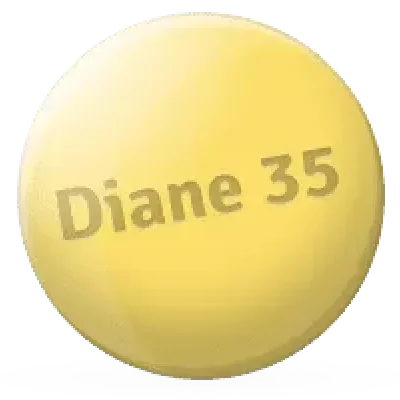
Diane 35 is a combined hormonal tablet for women of reproductive age with androgen-sensitive acne or excess facial and body hair. It helps reduce androgen activity, suppress ovulation, and decrease sebum production when topical treatment or antibiotics have not provided enough benefit.
Diane 35 is a combined hormonal tablet containing cyproterone acetate and ethinylestradiol.
The dose is stated on the pack—follow the leaflet. Cyproterone acetate is an anti-androgen with progestogenic activity, while ethinylestradiol is an oestrogen.
Androgens are hormones present in all women in small amounts. When the skin is sensitive to androgens, the sebaceous glands can produce excess oil. Pores then become more likely to block, leading to inflamed spots, persistent acne, and sometimes unwanted hair growth.
Diane 35 is intended for women whose acne is linked to androgen sensitivity and has not improved sufficiently with local treatments or oral antibiotics. It also prevents pregnancy while it is being taken correctly, though its main reason for use is androgen-related skin or hair symptoms rather than contraception alone. EMA safety reviews place cyproterone acetate–ethinylestradiol products among combined hormonal therapies that require careful assessment of clot-risk factors. [1]
Diane 35 is taken orally as one tablet daily for 21 consecutive days, followed by a seven-day tablet-free interval. Withdrawal bleeding commonly occurs during that break. Start the next strip after seven days, even if bleeding has not completely stopped.
A practical routine is:
If a tablet is less than 12 hours late, take it as soon as remembered and continue the next tablet at the usual time. If more than 12 hours have passed, contraceptive reliability can fall. Take the most recently missed tablet, continue the strip, and use a barrier method for seven days. A missed tablet during the final week of active tablets may mean skipping the tablet-free interval and starting the next strip immediately.
Vomiting or severe diarrhoea shortly after taking a tablet may reduce absorption. The Faculty of Sexual and Reproductive Healthcare provides detailed missed-pill guidance for combined hormonal contraception, including the need for additional precautions after prolonged gastrointestinal illness. [3]
Cyproterone acetate blocks androgen receptors in the skin and reduces androgen-driven sebum production. Less sebum means fewer conditions for blocked pores and inflammatory acne lesions.
Ethinylestradiol supports the anti-androgen effect by reducing ovarian androgen production and increasing sex hormone-binding globulin. This protein binds circulating testosterone, leaving less free hormone available to stimulate the skin and hair follicles.
The combined action can improve:
Improvement is rarely immediate. Skin often needs several cycles before the reduction in oil production becomes visible. For acne, the National Institute for Health and Care Excellence (NICE) and the American Academy of Dermatology include combined oral hormonal treatment among evidence-based systemic options for suitable women, alongside topical therapies and other prescription approaches. [2]
A limitation is that Diane 35 does not remove every cause of acne. Acne driven mainly by cosmetics, friction, untreated bacterial inflammation, or inappropriate skin products may still need a separate approach.
It is used in women of reproductive age for androgen-sensitive acne and excess facial or body hair when topical acne treatment or antibiotics have not provided enough benefit.
Diane 35 is one hormonal route for acne with androgen-related features. The best option depends on the skin pattern, medical history, pregnancy plans, clot-risk factors, and whether contraception is also wanted.
| Approach | Main action | Typical role |
|---|---|---|
| Diane 35 | Anti-androgen plus oestrogen | Acne or hirsutism linked to androgen sensitivity |
| Standard combined oral contraceptive | Ovulation suppression and hormonal cycle control | Contraception with possible acne benefit |
| Spironolactone | Blocks androgen effects without providing contraception | Hormonal acne when a prescriber considers it appropriate |
Diane 35 can be a strong option when oily skin, inflammatory acne, and unwanted hair growth occur together. Standard combined pills may help acne but do not all provide the same anti-androgen effect. Spironolactone may be useful for hormonal acne, yet it has different precautions and is not a contraceptive.
The main trade-off is vascular risk. Combined hormonal treatment can raise the risk of venous thromboembolism, meaning a blood clot in a deep vein or lung. This risk is still uncommon in healthy young women, but it becomes more relevant with smoking, obesity, immobility, inherited clotting disorders, or a personal history of thrombosis.
Extra caution is needed with:
Some medicines can reduce hormonal contraceptive reliability. These include certain anti-seizure medicines, rifampicin or rifabutin antibiotics, some HIV treatments, and St John’s wort. Enzyme-inducing medicines can speed up hormone breakdown in the liver.
The WHO Medical Eligibility Criteria identifies smoking, migraine with aura, thrombotic disease, and several cardiovascular conditions as situations where combined hormonal contraceptives may be unsuitable. [4]
This medication is NOT for you if you have a current or previous blood clot in the legs or lungs, a known inherited clotting disorder, migraine with aura, severe or uncontrolled high blood pressure, certain heart or blood-vessel diseases, severe liver disease, or hormone-sensitive cancer.
Diane 35 should also be avoided during pregnancy and while breastfeeding. Women aged over 35 who smoke have a substantially higher cardiovascular risk with oestrogen-containing hormonal tablets.
Many women tolerate Diane 35 without severe problems. Early effects can include nausea, breast tenderness, headache, mood changes, abdominal discomfort, spotting between periods, or changes in menstrual bleeding.
These symptoms often settle during the first few cycles. Persistent or worsening effects deserve medical review because a different hormonal option may suit the individual better.
Potential side effects include:
Blood clots are uncommon but medically serious. Seek urgent medical help for sudden shortness of breath, chest pain, coughing blood, one-sided leg swelling or pain, sudden severe headache, weakness on one side of the body, or sudden visual disturbance.
Some patients expect acne to clear within one strip. It often takes longer. Stopping and restarting treatment repeatedly can make both cycle control and side-effect assessment harder.
The most frequent mistake is treating Diane 35 as a quick acne remedy. Hormonal acne needs time, and changing products every month makes it difficult to judge the true response.
Other avoidable mistakes include:
Another common problem is stopping as soon as the skin improves. Hormonal symptoms can return after treatment ends, so the next step should be planned around acne control, contraception needs, and future pregnancy plans.
In clinical practice, prescribers usually look for a pattern rather than treating one isolated spot. Diane 35 is more likely to be considered when acne is persistent, oily, inflammatory, concentrated around the jawline or lower face, and accompanied by unwanted hair growth or cycle-related flares.
Doctors also assess clot-risk factors before prescribing. A history of migraine aura, smoking, previous thrombosis, or a strong family history can change the decision completely. Blood pressure measurement is part of routine assessment for combined hormonal therapy.
Treatment response is usually reviewed after several cycles. If acne improves, Diane 35 is not normally continued indefinitely without reassessment, because the anti-androgen benefit must be balanced against its hormonal risks.
Acne improvement often becomes clearer after two to three treatment cycles, while fuller benefit may require several months of consistent use. Existing deep inflammatory lesions can take weeks to settle because the treatment reduces new androgen-driven activity rather than instantly removing blocked pores. The American Academy of Dermatology’s 2024 acne guidance supports hormonal therapy as a systemic option for appropriate patients.
Diane 35 prevents pregnancy when taken correctly, but it is generally selected for women who also need treatment for androgen-sensitive acne or hirsutism. Its anti-androgen component distinguishes it from many standard combined contraceptive pills. The EMA’s 2013 review stated that cyproterone acetate–ethinylestradiol treatment should be limited to androgen-related conditions after other acne treatments have not worked adequately.
Take a tablet missed by less than 12 hours as soon as you remember, then take the next tablet at the usual time. When the delay exceeds 12 hours, take the most recently missed tablet, continue daily dosing, and use barrier protection for seven days. The FSRH 2023 combined hormonal contraception guideline provides the detailed rules for missed doses, including special handling during the final active-tablet week.
Diane 35 can increase the risk of venous thromboembolism, like other oestrogen-containing hormonal tablets. The absolute risk remains low for many healthy women, yet previous clotting events, migraine with aura, smoking, major surgery, and prolonged immobility can make the risk unacceptable. WHO medical eligibility guidance, published in 2015, lists these factors among key reasons to avoid combined hormonal contraception. A prescriber should review these factors before treatment starts.
Topical acne treatment is often used alongside hormonal therapy, especially during the first few months. A clinician may recommend topical retinoids, benzoyl peroxide, or other targeted treatments depending on whether blackheads, inflammatory lesions, or pigmentation are the main concern. The 2024 American Academy of Dermatology guidance supports combination treatment plans when acne severity warrants them.
Some women report irritability, lower mood, or emotional changes while using hormonal treatment. A clear mood decline, new depression symptoms, or thoughts of self-harm requires prompt clinical assessment rather than waiting for the next cycle. WHO guidance from 2015 supports individual assessment of mental-health history when choosing hormonal contraception.
Your order will be securely packed and shipped within 24 hours. This is exactly what your package will look like (images of an actual item sent). It has the size and look of a regular private letter (9.4x4.3x0.3 in. or 24x11x0.7 cm) and its contents cannot be seen.
My chin and jaw acne had been recurring before every period. The first month brought mild nausea in the mornings, then it settled. By the fourth strip, I had fewer painful spots and my skin was less oily.
I used it mainly because acne and facial hair had become more noticeable. My breakouts reduced after about eight weeks. I had breast tenderness at the beginning, which was annoying but manageable.
My cycles became predictable, but I had spotting in the second month and felt more emotional than usual. The acne was starting to improve, though I needed a review because the mood change was affecting work.
The difference was gradual rather than dramatic. I noticed fewer deep spots around my jaw and less need for heavy concealer. I set a recurring reminder because missing one tablet made me anxious.