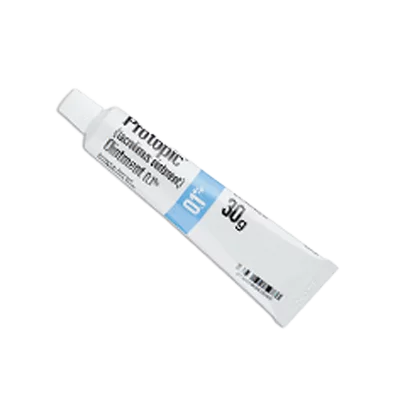
Description
Protopic is a tacrolimus 0.1% ointment for adults with moderate to severe atopic dermatitis, also called eczema. Tacrolimus is a topical calcineurin inhibitor, a non-steroid anti-inflammatory medicine used for eczema affecting sensitive or recurrently inflamed areas.
Composition
Protopic contains tacrolimus 0.1% in an ointment base and comes in a 30 g tube. Tacrolimus is a topical calcineurin inhibitor, a non-steroid anti-inflammatory medicine used for eczema affecting sensitive or recurrently inflamed areas.
Unlike corticosteroid creams, tacrolimus does not cause skin thinning when used as directed. This makes it useful for areas where skin is naturally delicate, including the face, eyelids, neck, skin folds, and hands.
- Active substance: tacrolimus 0.1%
- Dosage form: topical ointment
- Medicine class: topical calcineurin inhibitor
- Main use: moderate to severe atopic dermatitis in adults aged 16 years and over
- Typical treatment areas: face, eyelids, neck, folds, hands, and other eczema-affected skin
Protopic ointment can feel greasier than a cream. A very thin film is enough; applying a thick white layer does not make the medicine work faster.
Dosage and usage
Apply Protopic to affected eczema patches only. Adults and adolescents aged 16 years and over generally use the 0.1% ointment twice daily during an active flare.
- Wash hands before and after application, unless the hands are the treatment area.
- Apply a thin layer to clean, dry eczema-affected skin.
- Use it twice daily during active inflammation.
- Avoid the eyes, inside of the mouth, nostrils, and other mucous membranes.
- Do not cover treated skin with airtight bandages or occlusive dressings.
- Continue until the eczema patch clears, then stop treatment on that area.
- For frequent flares, a clinician may recommend maintenance treatment twice weekly on areas that commonly relapse.
The FDA prescribing information supports short-term and intermittent long-term use, rather than uninterrupted daily use for long periods [2]. If no improvement is seen after about six weeks of regular treatment, the eczema diagnosis and treatment plan should be reviewed.
Leave time between Protopic and moisturiser. Applying the ointment first and waiting around two hours before an emollient helps avoid diluting tacrolimus across unaffected skin.
If a dose is missed, apply it when remembered unless the next planned application is close. Do not apply extra ointment to compensate.
How it works
Atopic dermatitis involves an impaired skin barrier and an overactive local immune response. Tacrolimus blocks calcineurin, a protein involved in activating T cells. This reduces the release of inflammatory signals that cause itching, redness, swelling, and repeated scratching.
The effect is local to the treated skin. It does not work as a moisturiser, so regular emollient use remains useful for reducing dryness and supporting the skin barrier.
The European Medicines Agency describes tacrolimus ointment as a treatment for moderate to severe atopic dermatitis when conventional topical treatments are unsuitable or insufficient [1].
Indications
It is used on inflamed, itchy skin when topical corticosteroids are unsuitable or have not provided adequate control.
Protopic is one option within eczema care. The best approach depends on the site of eczema, flare severity, infection risk, and how often symptoms return.
Topical corticosteroids often remain the first treatment for a sudden eczema flare on thicker body skin. Protopic is frequently chosen for facial eczema, eyelid eczema, neck folds, or recurrent areas where steroid exposure needs reducing.
Comparison
Protopic is one option within eczema care. The best approach depends on the site of eczema, flare severity, infection risk, and how often symptoms return.
Emollients are still part of the routine. They reduce dryness and can decrease the itch-scratch cycle, but they do not replace anti-inflammatory treatment when skin is visibly red, thickened, or intensely itchy.
Contraindications
- Active bacterial, viral, or fungal infection on the intended treatment area
- Cold sores, chickenpox, shingles, or unexplained blisters on affected skin
- A weakened immune system caused by disease or immunosuppressive treatment
- Suspected skin cancer or unexplained persistent skin lesions
- Severe skin-barrier disorders where absorption may be increased
- Pregnancy or breastfeeding without an individual risk assessment
Tacrolimus is not intended for use under airtight dressings because occlusion can increase absorption. Do not use it on mucous membranes. Keep it away from the eyes; if ointment enters an eye, rinse gently with water.
Systemic drug interactions are unlikely with limited topical use because blood levels are usually very low. Extensive application to severely damaged skin can increase absorption, so people taking medicines that suppress immunity need an individual treatment plan.
The FDA includes a warning about rare reports of lymphoma and skin malignancy in people using topical calcineurin inhibitors. A direct causal relationship has not been established, yet the practical approach is clear: use the smallest amount needed on affected skin, avoid continuous long-term daily application, and protect treated areas from excessive ultraviolet exposure [4].
When this is not for you
Protopic is not for you if you have had an allergy to tacrolimus, macrolide medicines, or any component of the ointment.
Do not apply Protopic onto a cold sore, weeping infected patch, or fresh vaccination-site reaction. Treating inflamed but infected skin can make the infection harder to recognise.
Side effects
The most frequent side effects are local skin reactions. Burning, warmth, stinging, itching, redness, and tingling can occur where Protopic is applied. These reactions often begin soon after treatment starts and tend to lessen as eczema improves.
Some people notice greater sensitivity to heat, hot showers, alcohol flushing, or spicy food during early treatment. This is usually temporary, though it can be frustrating when facial eczema is involved.
More serious problems are uncommon but need prompt attention. Stop applying Protopic to an area that develops spreading crusting, pus, painful blisters, fever, or rapidly worsening redness, as these may indicate a bacterial, viral, or fungal skin infection. Tacrolimus should not be applied to clinically infected eczema until the infection has been treated.
The American Academy of Dermatology’s 2023 topical-therapy guideline supports topical calcineurin inhibitors as steroid-sparing options for atopic dermatitis and recognises local burning as a common practical limitation [3].
Avoid hot showers immediately after applying Protopic. Heat can intensify the temporary burning sensation, especially on the face and neck.
Protopic can increase sensitivity to ultraviolet light. Limit unnecessary sun exposure on treated skin, avoid tanning devices, and use protective clothing when outdoors.
Common mistakes
- Using too much ointment: a thick layer feels protective but does not improve anti-inflammatory action.
- Applying it to normal skin: Protopic is intended for eczema patches and prevention plans set by a prescriber, not as an all-over body moisturiser.
- Stopping after one or two stinging applications: temporary burning is common, especially when eczema is raw.
- Using it over an infection: yellow crusting, painful blisters, or new pus need treatment for infection first.
- Applying moisturiser immediately on top: this can spread and dilute the medicine.
- Ignoring sun sensitivity: treated skin needs sensible protection from direct ultraviolet exposure.
- Using daily for months without reassessment: intermittent use is preferred for long-term eczema control.
One detail patients often miss is alcohol flushing. A glass of wine or other alcoholic drink may trigger facial warmth and redness while using tacrolimus ointment. The reaction is temporary and is more likely during early treatment.
What doctors say
In dermatology practice, Protopic is often selected when eczema repeatedly affects the eyelids, face, neck, or folds. These areas can respond well to topical steroids, yet repeated steroid courses may create concerns about thinning skin, visible blood vessels, or rebound symptoms after frequent use.
Doctors usually set realistic expectations. Protopic reduces inflammation; it does not permanently remove the tendency to eczema. It works best when applied early in a flare, alongside regular moisturising and avoidance of personal triggers such as fragranced skincare, harsh cleansers, sweating, or known contact allergens.
The first week can test patience. People often stop because of stinging, then miss the benefit that appears once the inflamed skin barrier begins to recover. A clinician may suggest a short initial anti-inflammatory plan for very acute eczema before moving to tacrolimus in sensitive areas.