Description
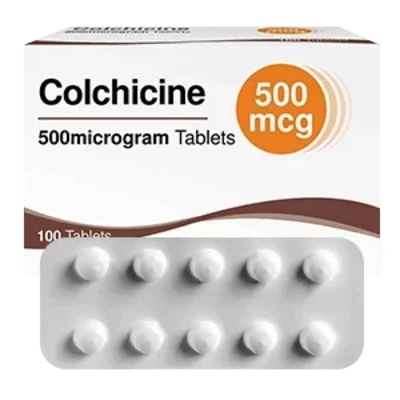
Colchicine is an anti-inflammatory medicine supplied as 500 microgram tablets. It is used for adults with acute gout and may be prescribed to prevent gout flares or manage familial Mediterranean fever.
Composition
Each tablet contains 500 micrograms of colchicine. Colchicine belongs to a group of anti-inflammatory medicines with a narrow therapeutic range, meaning that taking more than prescribed can cause serious toxicity. It is used for short-term gout flare treatment, flare prevention during urate-lowering therapy, and selected cases of familial Mediterranean fever.
Colchicine does not lower uric acid.
The FDA describes colchicine as a microtubule inhibitor. Microtubules are tiny structural fibres inside cells; colchicine disrupts their assembly, reducing the movement and activation of inflammatory cells at the affected joint [1].
A 500 microgram tablet is a small dose, yet colchicine is not a medicine for self-escalation. Do not add extra tablets because joint pain has not eased immediately.
Dosage and usage
Colchicine tablets are swallowed with water. The prescribed schedule depends on the reason for treatment, kidney function, liver function, age, and other medicines.
Common prescribing approaches include:
- Acute gout: treatment may begin with a higher initial dose followed by a smaller dose after one hour, with no repeated course for several days in patients at higher toxicity risk.
- Gout-flare prevention: lower doses may be prescribed once or twice daily while urate-lowering treatment is being started or adjusted.
- Familial Mediterranean fever: dosing is individualised and may be taken regularly to reduce inflammatory attacks and amyloidosis risk.
- Missed dose: take the next scheduled dose at the usual time. Do not take two doses together.
The margin for dosing errors is small.
NHS guidance explains that colchicine schedules differ according to the condition being treated and that prescribed limits must not be exceeded, since overdose can be life-threatening [3]. For patients in the UAE, the treatment plan should also account for medicines already prescribed through MOHAP-regulated clinical care.
If diarrhoea begins soon after starting colchicine, do not treat it as a minor inconvenience and continue increasing the dose. It can be an early sign that exposure is too high.
How it works
During a gout flare, monosodium urate crystals activate the immune system inside a joint. Neutrophils, a type of white blood cell, enter the area and release inflammatory signals that cause swelling, heat, severe pain, and restricted movement.
Colchicine binds to tubulin, a protein needed to form microtubules. This slows neutrophil migration, reduces inflammatory signalling, and limits the inflammatory response around urate crystals. Relief is most useful when treatment begins early in a flare, before inflammation becomes fully established.
Unlike medicines that lower uric acid, colchicine does not dissolve crystals or correct long-term hyperuricaemia. Its role is to control inflammation. The European Alliance of Associations for Rheumatology includes low-dose colchicine among recommended options for managing acute gout flares, alongside anti-inflammatory alternatives selected according to individual risks [2].
Indications
It reduces inflammation triggered by urate crystals without lowering the body’s uric acid level.
Comparison
Colchicine is often chosen when early treatment is possible and when an anti-inflammatory option is needed without using a non-steroidal anti-inflammatory drug. The best choice depends on kidney function, ulcer history, cardiovascular risk, diabetes, infection risk, and interacting medicines.
Colchicine can be useful for people who cannot take NSAIDs because of stomach-ulcer risk or anticoagulant treatment. Its limitation is the extensive interaction profile and the need for dose reduction or avoidance in renal and hepatic impairment. Corticosteroids may act quickly, though they can raise blood glucose and may be less suitable during uncontrolled infection.
Contraindications
Avoid colchicine or use it only under specialist-directed dosing if you have:
- severe renal impairment;
- severe hepatic impairment;
- a blood disorder or very low blood-cell counts;
- severe gastrointestinal disease with ongoing diarrhoea;
- a neuromuscular disorder;
- frailty or advanced age combined with impaired kidney function.
High-risk interactions include clarithromycin, erythromycin, ketoconazole, itraconazole, ciclosporin, verapamil, diltiazem, ritonavir-containing antiviral therapy, and some other strong CYP3A4 or P-glycoprotein inhibitors. Combining these medicines can raise colchicine concentrations to dangerous levels. Statins and fibrates may also increase the chance of muscle toxicity.
Grapefruit and grapefruit juice can increase colchicine exposure.
Pregnancy and breastfeeding require individual medical assessment. Colchicine may be used in selected people with familial Mediterranean fever, though the dose and monitoring plan should be determined by the treating clinician. The WHO Model List of Essential Medicines includes colchicine for familial Mediterranean fever, reflecting its established role in this specific inflammatory condition [5].
When this is not for you
Colchicine is not for you if you have previously had a severe allergic reaction to colchicine or if a prescriber has told you that colchicine is unsuitable because of serious kidney or liver impairment.
Side effects
Digestive effects are the most common limitation with colchicine. Diarrhoea, nausea, abdominal cramping, vomiting, and reduced appetite can occur, often when the dose is too high for the individual or when another medicine raises colchicine levels.
Diarrhoea is the usual limiting effect.
Less common but medically serious reactions need urgent assessment:
- severe or persistent vomiting, diarrhoea, or abdominal pain;
- unusual bruising, mouth ulcers, fever, sore throat, or recurrent infections, which may signal bone-marrow suppression;
- new muscle pain, weakness, dark urine, or marked fatigue, which may indicate muscle injury;
- numbness, tingling, or weakness affecting hands or feet;
- rash, facial swelling, wheezing, or difficulty breathing.
Colchicine toxicity can affect the gut, bone marrow, muscles, nerves, kidneys, and heart. Risk rises sharply when colchicine is combined with medicines that inhibit CYP3A4 or P-glycoprotein, two systems that normally help the body clear the medicine. The American College of Rheumatology advises choosing gout-flare therapy according to comorbidities and concurrent treatment, rather than treating every flare with the same regimen [4].
Muscle pain after adding colchicine to a statin deserves attention, especially if weakness makes stairs or lifting a bag harder than usual. This pattern needs prompt medical review rather than waiting for the next appointment.
Common mistakes
- Repeating doses too soon: pain can remain intense for hours, but extra colchicine does not provide proportionate relief and can cause toxicity.
- Using it as a uric-acid reducer: colchicine calms inflammation; it does not replace allopurinol, febuxostat, or another long-term urate-lowering strategy when those are prescribed.
- Ignoring diarrhoea: persistent diarrhoea can lead to dehydration and may be an early warning of excessive exposure.
- Starting a macrolide antibiotic without reviewing interactions: clarithromycin is a classic high-risk example.
- Assuming past tolerance guarantees future tolerance: a new statin, reduced kidney function, dehydration, or acute illness can change colchicine exposure.
- Stopping preventive colchicine too early: when it is prescribed during initiation of urate-lowering therapy, stopping prematurely can allow flares to occur during the unstable early phase.
Colchicine is not a painkiller to keep taking until the joint feels normal. The intended course has a limit, even if stiffness lingers after the acute inflammation starts settling.
What doctors say
In clinical practice, doctors often separate two goals: controlling today’s flare and preventing the next one. Colchicine can help with the first goal, yet it does not replace long-term urate-lowering treatment when recurrent gout is driven by persistently raised uric acid. Early use tends to provide better flare control than waiting until swelling has peaked. Doctors also pay close attention to kidney function because the same tablet regimen may be excessive for someone with reduced clearance. A person taking several long-term medicines may need a different option even when colchicine worked well in the past. EMA pharmacovigilance principles also place interaction screening at the centre of medicines with a narrow therapeutic range.