Description
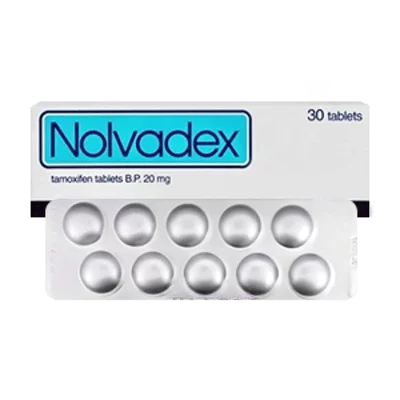
Nolvadex is a tamoxifen tablet used in hormone receptor-positive breast cancer treatment and in selected breast cancer risk-reduction plans. It is prescribed for adults whose tumour growth is influenced by oestrogen. Tamoxifen blocks oestrogen activity in breast tissue, helping reduce stimulation of hormone-sensitive cancer cells. Treatment decisions also consider tumour stage and prior therapy.
Composition
Nolvadex contains tamoxifen per tablet. The dose is stated on the pack — follow the leaflet. Tamoxifen belongs to the selective oestrogen receptor modulator, or SERM, class. A SERM can block oestrogen in one tissue while having oestrogen-like activity in others, including bone and the lining of the uterus.
Tamoxifen tablets should be swallowed whole with water. Splitting a tablet is only appropriate when an oncology prescriber has specifically included it in the treatment plan.
Dosage and usage
Nolvadex tablets contain tamoxifen. The dose is stated on the pack — follow the leaflet. An oncology specialist may use a different regimen for metastatic disease or an individual treatment plan.
- Take the prescribed daily dose at the same time each day.
- Swallow the tablet with water.
- It can be taken with food or on an empty stomach.
- Continue for the planned treatment duration, which may extend for years in adjuvant breast cancer care.
- If a dose is missed, take it when remembered unless the next dose is close. Do not take two doses together.
A phone reminder is more useful than relying on memory. Tamoxifen is often taken for years, and missed doses commonly happen when daily routines change during travel, fasting periods, or shift work.
Some people prefer a morning dose, while others choose evening dosing if nausea or tiredness occurs. The best time is the one that supports daily adherence without affecting sleep.
How it works
Oestrogen can attach to receptors on certain breast cancer cells and encourage them to grow. Tamoxifen occupies these receptors in breast tissue, reducing the growth signal. This is why the medicine is useful only when the cancer is hormone receptor-positive.
Its action is tissue-selective. In breast tissue, tamoxifen acts mainly as an oestrogen blocker. In bone, it may preserve some oestrogen-like activity, which differs from medicines that lower oestrogen production throughout the body. In the uterus, tamoxifen can have partial oestrogen-like effects, explaining why unexpected vaginal bleeding requires prompt clinical assessment.
Long-term evidence supports endocrine therapy after surgery for oestrogen receptor-positive disease. The Early Breast Cancer Trialists’ Collaborative Group reported that five years of tamoxifen substantially reduced recurrence and breast-cancer mortality in women with oestrogen receptor-positive early breast cancer [2].
The benefit develops through consistent receptor blockade. It is not an instant treatment.
Indications
Nolvadex is used within oncology-directed treatment plans for hormone receptor-positive breast cancer. It may be prescribed after surgery, alongside other treatments, for metastatic disease, or for risk reduction in people with a high breast cancer risk profile. FDA prescribing information identifies tamoxifen as an anti-oestrogen treatment for breast cancer and specified risk-reduction indications [1].
Comparison
Tamoxifen is one endocrine option, not the only one. Choice depends on menopausal status, tumour biology, previous treatment, bone health, clotting history, and the reason endocrine therapy is being used.
NICE guidance for early and locally advanced breast cancer supports tailoring endocrine therapy to menopausal status and recurrence risk [3]. Aromatase inhibitors may offer an advantage for some postmenopausal patients, yet they can worsen joint pain and accelerate bone loss. Tamoxifen may be preferred where bone density is already a concern, though it carries a greater risk of blood clots and uterine effects.
Contraindications
- a serious allergic reaction to tamoxifen or a listed tablet ingredient;
- pregnancy;
- a previous deep-vein thrombosis or pulmonary embolism;
- a known inherited clotting disorder;
- current treatment with warfarin-type anticoagulants;
- unexplained vaginal bleeding or a history of endometrial cancer;
- serious liver disease;
- cataracts or significant vision changes;
- planned major surgery or a period of prolonged immobility.
Tamoxifen can increase the risk of venous thromboembolism. Surgery, long-distance immobility, smoking, obesity, and a personal history of clots can add to that risk. The EMA’s Summary of Product Characteristics framework requires clear reporting of contraindications, interactions, and serious adverse effects for prescription medicines [4].
Before an operation, tell the surgical and anaesthesia teams that tamoxifen is part of your treatment. They may coordinate timing around the procedure to reduce clotting risk.
When this is not for you
Nolvadex is not for you if you have had a serious allergic reaction to tamoxifen or a listed tablet ingredient, or if you are pregnant. Talk with your oncology team before treatment if you have a history of blood clots, unexplained vaginal bleeding, liver disease, vision problems, or are taking warfarin-type anticoagulants.
Side effects
Hot flushes are among the most common effects of Nolvadex. Sweating at night, tiredness, nausea, leg cramps, headache, vaginal discharge, menstrual changes, and reduced libido can also occur. These effects may settle after the first weeks, though hot flushes can persist.
For people who still have periods, cycles may become irregular or stop. This does not prove that pregnancy is impossible. Tamoxifen can harm a developing fetus, so a non-hormonal contraceptive plan is required during treatment and for the period set by the oncology team after treatment ends.
More serious symptoms need urgent medical assessment:
- sudden chest pain, shortness of breath, or coughing blood;
- swelling, pain, warmth, or redness in one calf or thigh;
- unusual vaginal bleeding, pelvic pressure, or new vaginal discharge;
- vision changes, including blurred vision or difficulty focusing;
- severe skin rash, facial swelling, or breathing difficulty.
Night sweats can be less disruptive when the bedroom is kept cool and layered sleepwear is used. Persistent insomnia still deserves discussion because poor sleep can make hot flushes feel far worse.
A less obvious issue involves antidepressants. Paroxetine and fluoxetine strongly inhibit CYP2D6, an enzyme needed to form endoxifen, an active tamoxifen metabolite. Oncology teams often select alternatives with less CYP2D6 inhibition when antidepressant treatment is needed.
What doctors say
In clinical practice, oncology teams focus first on tumour hormone-receptor status and recurrence risk. Tamoxifen is often viewed as a cornerstone endocrine option for premenopausal patients with hormone-sensitive breast cancer. Its long treatment duration is one reason that managing side effects early matters.
Doctors also look beyond hot flushes. New calf pain, breathlessness, unusual bleeding, or sudden visual symptoms change the urgency of assessment. A patient who feels well should still keep scheduled oncology follow-ups because tamoxifen treatment involves monitoring for benefits, tolerability, and changing health risks.
The WHO includes tamoxifen on its Model List of Essential Medicines, reflecting its established role in breast cancer care [5].