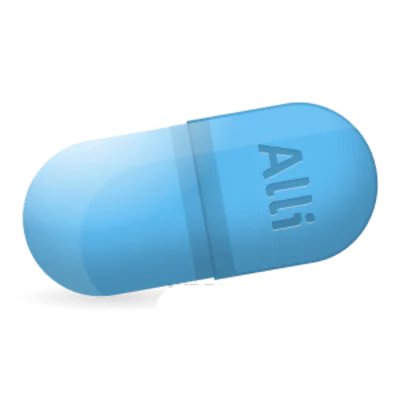
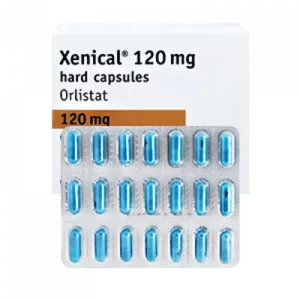
Description
Alli is an oral weight-management medicine containing orlistat. It is intended for adults working toward weight reduction through lower-fat eating and regular physical activity. Orlistat acts in the gut, reducing the amount of dietary fat absorbed from a meal.
Composition
Alli capsules contain orlistat, a lipase inhibitor. Lipases are digestive enzymes that split dietary fat into absorbable components. By blocking part of this enzyme activity in the stomach and small intestine, orlistat leaves some meal fat unabsorbed and eliminates it in the stool [1].
Alli does not suppress appetite or stimulate metabolism. Its benefit depends on the fat content of meals. A lower-fat, calorie-controlled eating pattern makes treatment more comfortable and more useful.
A practical detail people often miss: oily spotting, urgency, or loose stools after a very fatty meal are usually a direct sign that the meal contained more fat than the body could manage while taking orlistat.
Dosage and usage
Take one Alli capsule with each main meal that contains fat. The capsule may be taken shortly before, during, or up to one hour after that meal. If a meal is skipped or contains no fat, skip the capsule for that meal.
The approved use pattern for orlistat links each dose to food rather than to a fixed clock time. The European Medicines Agency describes this meal-linked approach for orlistat treatment and highlights the importance of nutritional planning during use [2].
- Divide daily fat intake across meals rather than eating most of it at dinner.
- Choose lean protein, vegetables, fruit, legumes, and measured portions of oils, nuts, cheese, and sauces.
- Swallow the capsule whole with water.
- Do not take an extra capsule after a high-fat meal.
- A missed capsule is not made up later.
- Monitor weight and waist measurements at regular intervals, using the same scale and similar clothing conditions.
Restaurant meals can be deceptively high in fat because of dressings, fried coatings, cream sauces, and added oils. Choosing grilled food does not always mean the meal is low in fat.
How it works
Orlistat works locally in the digestive tract. It binds to gastric and pancreatic lipases, reducing the digestion and absorption of dietary triglycerides. The medication has minimal systemic absorption, so it does not act directly on the brain’s hunger centres.
The mechanism creates a clear trade-off. Alli can support weight loss without stimulant effects such as palpitations or insomnia, yet digestive effects are common when meals are rich in fat. Weight reduction still relies on a sustained calorie deficit.
Fat-soluble vitamins need attention. Vitamins A, D, E, and K may be absorbed less efficiently during treatment because their uptake depends partly on dietary fat.
A multivitamin containing vitamins A, D, E, and K is commonly taken at bedtime or at least two hours apart from Alli, so it is less likely to be affected by reduced fat absorption.
Indications
Alli is intended for adults working toward weight reduction alongside lower-fat eating and regular physical activity. Its active ingredient, orlistat, reduces the amount of dietary fat absorbed from meals in the gut. Use each capsule with a main meal that contains fat, following the directions stated on the pack.
Comparison
Weight management medicines differ most in where they act. Alli acts on dietary fat in the gut, while other options may influence appetite, blood glucose regulation, or nutrient absorption.
NICE guidance published in 2025 places medication within a broader obesity-management plan that includes nutrition, activity, sleep, and follow-up rather than treating a capsule as a stand-alone solution [3]. Alli is most suited to people who prefer a non-stimulant option and can maintain consistent control of meal fat.
Contraindications
This is NOT for you if you have chronic malabsorption syndrome or cholestasis, a condition where bile flow from the liver is blocked. It should also be avoided if you have previously had an allergic reaction to orlistat or any capsule component.
- Pregnancy: weight-loss treatment is not used during pregnancy.
- Breastfeeding: medical assessment is needed before using orlistat.
- Kidney disease or recurrent kidney stones: orlistat can increase urinary oxalate in susceptible people.
- Diabetes: blood-glucose treatment may need review as food intake and body weight change.
- Eating disorders: treatment that focuses heavily on food restriction and body weight may be inappropriate.
- Thyroid disease treated with levothyroxine: separate administration by at least four hours and monitor thyroid control.
- Ciclosporin: do not combine without prescriber-led monitoring, since orlistat may reduce ciclosporin levels.
- Warfarin or other vitamin K antagonists: INR monitoring may be required because vitamin K absorption can change.
- Anti-epileptic medicines, amiodarone, or antiretroviral treatment: a clinician must assess the combination before use.
When this is not for you
Avoid Alli if you have a condition that prevents normal absorption of food or bile flow from the liver, or if you have ever had an allergic reaction to orlistat or one of its capsule ingredients.
Speak with a clinician before use if you are pregnant or breastfeeding, have kidney disease, diabetes, an eating disorder, thyroid disease, or take medicines such as levothyroxine, ciclosporin, warfarin, anti-epileptic medicines, amiodarone, or antiretroviral treatment.
Side effects
Digestive effects are the main limitation of Alli. They occur because unabsorbed fat remains in the bowel. Common effects include oily or fatty stools, gas with oily discharge, increased bowel movements, loose stools, abdominal discomfort, and a need to reach a toilet quickly.
These effects are usually most noticeable early in treatment or after meals high in fat. They often improve when fat portions become smaller and are spread through the day.
More serious reactions are uncommon but need prompt medical assessment. Seek urgent care for facial swelling, breathing difficulty, widespread rash, severe or persistent abdominal pain, yellowing of the skin or eyes, dark urine, or a major change in urine output. Rare cases of severe liver injury and kidney problems linked to oxalate deposits have been reported with orlistat [5].
Keep a simple food-and-symptom note for the first two weeks. It often identifies one trigger meal, such as fried breakfast food or creamy coffee drinks, more clearly than trying to remember symptoms later.
Common mistakes
Several patterns make Alli less comfortable or less useful:
- Taking a capsule after a meal with no fat, then expecting extra weight loss.
- Using it after a high-fat takeaway meal and being surprised by urgency or oily leakage.
- Saving most daily fat for one evening meal.
- Forgetting vitamins A, D, E, and K for long periods.
- Taking levothyroxine too close to Alli.
- Treating the medicine as permission to eat unrestricted portions.
- Stopping after a few digestive symptoms without first reducing meal fat.
- Using a different scale, time of day, or clothing each time weight is measured.
One common misconception is that Alli blocks all fat from food. It does not. Some fat is still absorbed, and calorie intake still matters.
What doctors say
Clinicians usually frame Alli as a behaviour-linked medicine. It provides immediate feedback: high-fat meals are more likely to cause bowel effects, while planned meals tend to be better tolerated. This can help some people recognise portion sizes and hidden sources of fat.
WHO’s 2024 obesity guidance describes excess weight as a chronic, relapsing health issue influenced by biology, environment, diet, activity, sleep, medicines, and mental health [4]. A capsule cannot remove all of these influences. Progress is usually steadier when the plan also includes realistic meals, movement that fits daily life, and adequate sleep.
A useful expectation is gradual change. Rapid weight swings often reflect fluid shifts or overly restrictive eating rather than sustainable fat loss.