Verified
I took it for a dental infection. The throbbing eased after two days, and I finished the course. Taking it after breakfast helped because the first tablet made me nauseated.
Aug 24, 2026

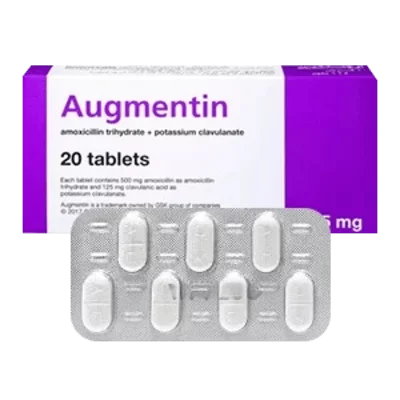
Augmentin is a penicillin-class antibiotic for adults with susceptible bacterial infections. It combines amoxicillin with clavulanate, which helps protect the antibiotic from bacterial enzymes that can inactivate it. The dose is stated on the pack — follow the leaflet.
Augmentin is a tablet antibiotic containing amoxicillin trihydrate and potassium clavulanate. The dose is stated on the pack — follow the leaflet. It is used for adults with susceptible bacterial infections affecting the respiratory tract, urinary tract, skin, and soft tissue. It belongs to the penicillin class and combines amoxicillin with clavulanate to extend antibacterial coverage.
Augmentin is a penicillin-class antibiotic combination, also called co-amoxiclav or amoxicillin-clavulanate. Each tablet contains amoxicillin trihydrate plus potassium clavulanate. The dose is stated on the pack — follow the leaflet.
Clavulanic acid is a beta-lactamase inhibitor. Beta-lactamases are bacterial enzymes that can break down amoxicillin before it reaches its target. Blocking those enzymes allows amoxicillin to remain active against more susceptible bacteria. This wider antibacterial coverage is the central reason clinicians may choose Augmentin instead of amoxicillin alone. [1]
The dose is stated on the pack — follow the leaflet. The prescriber may choose a different interval or duration based on infection severity, kidney function, and treatment response. Swallow the tablet whole with water, preferably at the start of a meal.
Stopping after two or three better days is a common mistake. Symptoms may settle before the bacteria are cleared, allowing infection to return. Taking doses too close together can increase nausea and diarrhoea without improving antibacterial action. A missed dose does not mean treatment has failed. Contact the prescriber if symptoms worsen or the infection does not improve.
Amoxicillin interferes with proteins that bacteria need to build and repair their protective cell wall. Growing bacteria become unstable and die. Clavulanic acid has little antibacterial action by itself, but it binds to selected beta-lactamase enzymes and protects amoxicillin from destruction.
The combination does not overcome every type of antibiotic resistance. Some bacteria use other resistance mechanisms, such as altered penicillin-binding proteins or reduced drug entry into the cell. Culture results and local prescribing guidance still matter when an infection is severe, recurrent, or not improving.
Augmentin is prescribed when a clinician suspects or confirms a bacterial infection caused by organisms that may produce beta-lactamase. It is used for infections where an antibiotic is clinically appropriate, rather than for routine cold symptoms.
Common treatment uses include:
The final choice depends on the infection site, kidney function, allergy history, likely bacteria, and local resistance patterns; NICE guidance also emphasizes these factors. EMA guidance on antibacterial medicines supports using antibiotics where bacterial infection is established or strongly suspected. [2]
Augmentin belongs to the penicillin family, yet clavulanic acid gives it a different resistance profile from amoxicillin or basic penicillin therapy. More coverage is not automatically better. A narrower antibiotic can be preferred when it targets the known bacteria and causes less disruption to normal gut flora.
| Antibiotic approach | Main feature | Typical clinical role |
|---|---|---|
| Augmentin: amoxicillin plus clavulanate | Clavulanate blocks selected beta-lactamases | Suspected mixed infection or beta-lactamase-producing bacteria |
| Amoxicillin | Penicillin-class antibacterial without clavulanate | Susceptible infections where broader coverage is unnecessary |
| Phenoxymethylpenicillin | Narrower penicillin activity | Selected streptococcal throat and dental infections |
Augmentin can be useful where amoxicillin alone may be broken down by bacterial beta-lactamase. Its trade-off is a higher likelihood of gastrointestinal effects. The choice should match the infection rather than the assumption that a broader antibiotic will always work better.
Augmentin is not for you if you have had a serious immediate allergy to amoxicillin, penicillin, clavulanic acid, or another beta-lactam antibiotic. Previous reactions such as anaphylaxis, facial swelling, severe hives, or breathing difficulty are especially relevant.
Avoid Augmentin if you previously developed jaundice or liver dysfunction linked to amoxicillin-clavulanate. Clavulanate-associated liver injury may appear during treatment or even after the course has ended.
Most people tolerate a prescribed course of Augmentin without serious problems. Digestive symptoms are the main drawback, and clavulanate is often the reason this combination causes more stomach upset than amoxicillin alone.
| Effect | What it may feel like | Practical response |
|---|---|---|
| Diarrhoea or loose stools | More frequent, softer bowel movements | Drink fluids and continue unless diarrhoea is severe or persistent |
| Nausea | Queasiness, reduced appetite | Take the tablet with food |
| Vomiting | Stomach upset soon after a dose | Seek advice if doses cannot be kept down |
| Rash | Itchy spots or widespread skin change | Stop and seek urgent assessment if swelling, blistering, or breathing symptoms occur |
Diarrhoea was among the most frequently reported adverse effects in clinical trials, followed by nausea and skin rash. A mild, short-lived change in bowel habit can occur during treatment. Severe watery diarrhoea, fever, abdominal cramping, or blood in the stool can indicate antibiotic-associated colitis caused by Clostridioides difficile and needs urgent medical assessment. [3]
Allergic reactions require fast action. Facial swelling, wheezing, throat tightness, faintness, extensive hives, blistering rash, or peeling skin are medical emergencies. A simple non-itchy rash can also occur with viral illnesses, yet it still needs clinical assessment before another dose is taken.
One detail patients often miss is that nausea can be worse when Augmentin is swallowed on an empty stomach. Food will not prevent every digestive effect, though it often makes the course easier to complete.
Several avoidable errors make Augmentin harder to tolerate or less likely to resolve the infection.
A frequent misconception is that stronger stomach symptoms mean the antibiotic is working better. They do not. Side effects reflect how the medicine affects the body, not whether the target bacteria are being cleared.
In clinical practice, doctors often select Augmentin when the infection pattern suggests bacteria that may resist amoxicillin alone. It is commonly considered for certain dental, respiratory, skin, and bite-related infections, depending on the person’s allergy history and kidney function.
Doctors also watch for two practical issues: gastrointestinal intolerance and unexpected rash. Mild nausea may settle when tablets are taken with food. A rapidly spreading rash, breathing symptoms, jaundice, or severe diarrhoea changes the situation and needs assessment rather than simply waiting for the next dose.
Clinical response is usually judged by symptom direction rather than a single moment of improvement. Fever, pain, swelling, urinary symptoms, or breathing symptoms should begin to move in the right direction during the expected treatment window. Worsening symptoms, new confusion, dehydration, or shortness of breath require prompt medical review.
Augmentin begins reaching antibacterial concentrations after a dose, yet symptom relief takes longer because inflamed tissue needs time to recover. Many bacterial infections show early improvement within a few days when the antibiotic matches the bacteria. Persistent fever, worsening pain, breathing difficulty, or no improvement during the expected period needs reassessment. The 2024 FDA prescribing information describes Augmentin as an antibacterial treatment for susceptible bacterial infections, not as a pain-relieving medicine.
Augmentin tablets are best taken at the start of a meal. Food can reduce stomach discomfort and improves clavulanate absorption. This approach is useful for people who experienced nausea with prior antibiotic courses. The 2019 EMA antibacterial guidance supports using medicines according to their approved administration instructions.
Augmentin is not simply a stronger dose of amoxicillin. It combines amoxicillin with clavulanate, which blocks certain bacterial beta-lactamase enzymes. This can extend activity against some organisms that would inactivate amoxicillin alone. The added clavulanate can also increase the chance of diarrhoea and nausea. The 2024 FDA prescribing information describes these as relevant adverse effects.
No. Colds and influenza are viral infections, while Augmentin targets bacteria. Taking antibiotics for viral symptoms does not shorten the illness or prevent complications. The 2023 WHO antimicrobial stewardship materials link unnecessary antibiotic exposure with growing resistance.
Take the missed dose when remembered unless it is nearly time for the next scheduled dose. If the next dose is close, skip the missed dose and resume the usual timing. Do not take two doses at once, as this can increase adverse effects. The 2024 FDA advises maintaining the prescribed dosing schedule and avoiding extra doses.
Yes. Mild bowel changes can occur during treatment or shortly afterwards. Severe watery diarrhoea, abdominal cramps, fever, or blood in the stool may signal C. difficile-associated diarrhoea and needs urgent assessment. This reaction can occur after antibiotics have been stopped. The 2024 FDA safety information includes this risk for antibacterial medicines.
Your order will be securely packed and shipped within 24 hours. This is exactly what your package will look like (images of an actual item sent). It has the size and look of a regular private letter (9.4x4.3x0.3 in. or 24x11x0.7 cm) and its contents cannot be seen.

Augmentin has no action against viruses. It does not treat the common cold, influenza, most sore throats, or viral coughs.
Antibiotics target bacterial structures and processes that viruses do not have. Taking an antibiotic for a viral illness exposes the person to side effects while offering no clinical benefit. WHO classifies amoxicillin-clavulanate within its AWaRe antibiotic framework and promotes targeted antibiotic use to slow antimicrobial resistance. [4]
Antibiotic resistance develops when bacteria survive exposure to an antibiotic and pass on traits that help them resist future treatment. Clavulanate helps Augmentin work against some beta-lactamase-producing bacteria, yet it cannot solve resistance caused by every mechanism.
Using leftover tablets, sharing antibiotics, doubling doses after a missed dose, or repeating a prior course for a new illness can select resistant bacteria. Resistance affects the individual and the wider community because infections may become harder to treat.
I took it for a dental infection. The throbbing eased after two days, and I finished the course. Taking it after breakfast helped because the first tablet made me nauseated.
My sinus pressure and thick discharge improved by the third day. I had loose stools near the end of treatment, but no pain or fever, and they settled shortly after finishing.
It helped my skin infection, but I developed an itchy rash on my arms after the second day. I stopped taking it and received a different antibiotic after assessment.
I kept forgetting the afternoon dose until I used phone reminders. Once I followed the timing properly, the cough and chest discomfort improved steadily.