Description
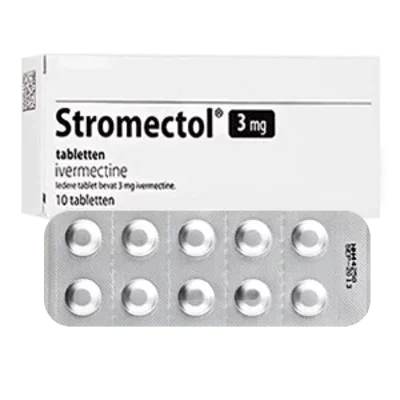
Stromectol is an oral antiparasitic tablet containing ivermectin. The dose is stated on the pack — follow the leaflet. It belongs to the antiparasitic medicine class known as anthelmintics, medicines used against certain parasitic worms and ectoparasites.
Composition
Each Stromectol tablet contains ivermectin. The dose is stated on the pack — follow the leaflet. It belongs to the antiparasitic medicine class known as anthelmintics, medicines used against certain parasitic worms and ectoparasites.
Ivermectin does not work against bacteria, viruses, or fungal infections. Its role is specific: it targets parasites that have nerve channels sensitive to ivermectin. This selectivity explains why treatment choice depends on the confirmed parasite and the affected body site.
The tablets are swallowed whole with water. Crushing them is not advisable unless a prescriber has given a specific reason, because accurate weight-based dosing depends on knowing how much ivermectin has been taken.
A useful detail for travel-related or longstanding digestive symptoms: strongyloidiasis can persist silently for years. A history of walking barefoot in endemic areas, unexplained eosinophilia, or planned immune-suppressing treatment can change the urgency of testing and treatment.
Dosage and usage
Stromectol dosing is weight-based and depends on the infection being treated. The dose is stated on the pack — follow the leaflet.
- Strongyloidiasis: a commonly used regimen is 200 micrograms per kilogram as a single oral dose. Some patients require a repeat dose after clinical review.
- Onchocerciasis: treatment is often 150 micrograms per kilogram as one dose, with repeat treatment scheduled according to parasite exposure and clinical follow-up.
- Scabies: oral ivermectin may be used in selected cases at 200 micrograms per kilogram, commonly with a repeat dose after 7 to 14 days because the medicine has limited activity against eggs.
- Timing: tablets are often taken on an empty stomach with water when following the Stromectol prescribing information.
- Missed dose: if a repeat dose has been planned, contact the prescribing clinician for a revised schedule rather than doubling tablets.
The number of tablets is not the same for every person. Body weight, diagnosis, liver function, coexisting infections, and the need for repeat treatment all matter.
The medicine is absorbed after oral use and is processed mainly through the liver. A meal can increase ivermectin exposure, which is why the timing of tablets should follow the prescriber’s instructions for the infection being treated.
For scabies, medication alone may not stop reinfestation. Close household contacts may need assessment and treatment at the same time, while recently used clothing, bedding, and towels need appropriate laundering or isolation.
How it works
Ivermectin binds to glutamate-gated chloride channels found in many invertebrates. Chloride enters parasite nerve and muscle cells, reducing their ability to transmit signals. The parasite becomes immobilised and is eliminated through normal body processes.
Human nerve cells are protected by the blood-brain barrier, which limits ivermectin entry into the central nervous system at prescribed doses. This protection can be weaker in people with certain neurological illnesses or when ivermectin is combined with medicines that affect drug transport or metabolism.
WHO guidance includes ivermectin among medicines used in public-health programmes against susceptible helminth infections [1].
Indications
It is used for selected parasitic infections in adults and eligible children, including strongyloidiasis and onchocerciasis, when clinically indicated.
- Strongyloidiasis: a commonly used regimen is 200 micrograms per kilogram as a single oral dose. Some patients require a repeat dose after clinical review.
- Onchocerciasis: treatment is often 150 micrograms per kilogram as one dose, with repeat treatment scheduled according to parasite exposure and clinical follow-up.
- Scabies: oral ivermectin may be used in selected cases at 200 micrograms per kilogram, commonly with a repeat dose after 7 to 14 days because the medicine has limited activity against eggs.
Comparison
Ivermectin is one treatment option, not a universal remedy for every parasite or every skin rash. The most suitable approach depends on the organism, infection site, severity, age, pregnancy status, and household exposure.
For uncomplicated scabies, topical permethrin is often selected first because it can be applied directly to affected skin. Oral ivermectin can be valuable for crusted scabies, widespread outbreaks, difficulty applying topical treatment, or repeated treatment failure under clinical supervision. A Cochrane review found that oral ivermectin and topical permethrin can both clear scabies, though treatment schedules and certainty of evidence vary between studies [2].
Contraindications
- Pregnancy, unless the expected benefit clearly outweighs potential fetal risk.
- Breastfeeding an infant younger than three months.
- Children weighing less than 15 kg, because safety data are limited.
- History of seizures, meningitis, severe neurological disease, or impaired blood-brain barrier function.
- Possible exposure to Loa loa in parts of Central or West Africa, where high parasite levels can raise the risk of serious encephalopathy after ivermectin.
- Severe liver disease, because ivermectin is metabolised in the liver.
- Use of warfarin, sedatives, benzodiazepines, anticonvulsants, or medicines that strongly affect CYP3A4 or P-glycoprotein activity.
Ivermectin may increase sedation when combined with alcohol or medicines that cause drowsiness. Warfarin users may need closer INR monitoring after treatment because altered anticoagulant response has been reported.
EMA has warned that ivermectin should only be used for approved parasitic indications and not as self-treatment for unrelated viral illnesses [4].
When this is not for you
Stromectol is not suitable if you have ever had an allergic reaction to ivermectin or any of its tablet ingredients. Speak with a clinician before treatment if you are pregnant, breastfeeding a very young infant, weigh less than 15 kg, have serious neurological or liver problems, may have been exposed to Loa loa, or take medicines such as warfarin, sedatives, anticonvulsants, or strong CYP3A4 or P-glycoprotein modifiers.
Side effects
Most people tolerate prescribed ivermectin without serious problems. Dizziness, nausea, diarrhoea, abdominal discomfort, itching, rash, and sleepiness can occur. In clinical data for strongyloidiasis, dizziness and itching were each reported in a small proportion of patients, while diarrhoea and nausea were also reported [3].
Side effects can be caused by ivermectin itself, by the immune system reacting to dying parasites, or by the parasite burden before treatment. This difference matters most in onchocerciasis, where a Mazzotti reaction may include fever, rash, swollen lymph nodes, muscle pain, dizziness, or low blood pressure.
Seek urgent medical attention for facial swelling, breathing difficulty, fainting, confusion, severe weakness, seizures, vision changes, or a widespread blistering rash. These reactions are uncommon, yet they require prompt assessment.
Plan the first dose for a time when you do not need to drive or operate machinery. Dizziness is usually mild, but it is an inconvenient surprise during a workday or a long drive.
People treated for a heavy parasite burden may feel temporarily worse before they improve. Persistent vomiting, severe abdominal pain, fever, or new neurological symptoms should not be managed by taking extra tablets.
Common mistakes
- Taking tablets for a rash without confirming that a parasite is involved.
- Using a standard adult tablet count despite a substantially different body weight.
- Taking a second dose early because itching has not disappeared after a few days.
- Treating one person for scabies while close contacts remain untreated.
- Reusing unwashed bedding, towels, or clothing after scabies therapy.
- Combining ivermectin with sedating medicines without reviewing interaction risk.
- Assuming persistent symptoms always mean drug resistance rather than reinfestation, inflammation, or a different diagnosis.
If scabies is suspected, trim fingernails before treatment and clean beneath them. Mites and eggs can remain under nails, and scratching can transfer them to other skin areas.
A further mistake is ignoring eye symptoms or neurological changes after treatment for onchocerciasis or possible Loa loa exposure. Those symptoms need medical assessment rather than another dose.
What doctors say
In clinical practice, doctors focus first on identifying the parasite rather than matching treatment to symptoms alone. Itching can come from eczema, allergy, fungal infection, bedbugs, scabies, or a medicine reaction. Diarrhoea can have dozens of causes. Stromectol is useful when the diagnosis fits ivermectin-sensitive disease.
For strongyloidiasis, clinicians are often alert to the risk of hyperinfection in people who may receive corticosteroids, chemotherapy, or transplant-related immune suppression. Treating confirmed infection before immune suppression can be clinically significant because disseminated strongyloidiasis can become severe.
Doctors also expect a realistic timeline. Parasites may be cleared quickly, while skin irritation, itching, and inflammation take longer to settle. A repeat stool test, skin review, or parasite-specific follow-up may be planned depending on the diagnosis.
MOHAP-regulated clinical care places emphasis on diagnosis, weight-based dosing, and recognition of infection-specific risks. A fixed number of tablets chosen without weight calculation is a common cause of underdosing or avoidable adverse effects.