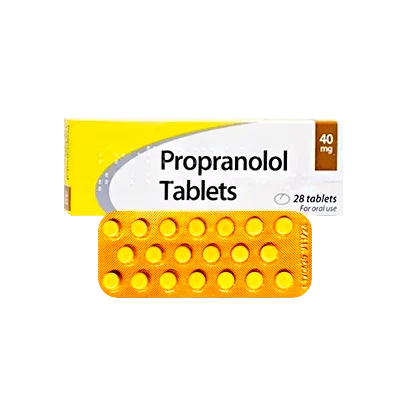
Description
The dose is stated on the pack — follow the leaflet. Propranolol belongs to the non-selective beta-blocker class, meaning it blocks beta-1 receptors in the heart and beta-2 receptors in the lungs, blood vessels, and other tissues.
Composition
The dose is stated on the pack — follow the leaflet.
Propranolol belongs to the non-selective beta-blocker class, meaning it blocks beta-1 receptors in the heart and beta-2 receptors in the lungs, blood vessels, and other tissues.
This wider receptor action explains both its usefulness and its limits. A slower heart rate can ease palpitations, tremor, and exertional chest discomfort. Blocking beta-2 receptors may also narrow the airways in sensitive people, which is why asthma is a major concern.
The tablet is swallowed whole.
Take Propranolol at a consistent time each day. For long-term treatment, keeping the same relation to meals helps maintain steadier absorption and blood levels.
Dosage and usage
The prescribed dose depends on the condition being treated, resting pulse, blood pressure, age, kidney and liver function, and other medicines. The dose is stated on the pack — follow the leaflet, and the number of tablets and timing are selected for the individual indication.
Typical prescribing patterns include:
- High blood pressure: treatment may begin with the dose stated on the pack — follow the leaflet, with adjustment according to response.
- Angina or rhythm control: doses are divided during the day and adjusted by the prescriber.
- Migraine prevention: regular daily use is needed; it is not a fast treatment for an active migraine attack.
- Essential tremor or physical anxiety symptoms: timing may be tailored to predictable situations or used regularly when prescribed.
- Oral use: swallow the tablet with water. Do not crush it unless a prescriber has specifically advised that approach.
A missed dose is not doubled.
If a dose is missed, take it when remembered unless the next scheduled dose is close. Taking two doses together can cause excessive slowing of the heart rate, dizziness, or low blood pressure.
A home blood-pressure monitor does not replace pulse awareness. If the pulse is repeatedly below 50 beats per minute, or dizziness occurs when standing, the prescribed regimen needs prompt clinical review.
How it works
Adrenaline prepares the body for stress by speeding the heart, raising blood pressure, and increasing tremor. Propranolol reduces this response by blocking beta receptors. The heart beats more slowly and with less force. Blood pressure may fall over time. Physical symptoms such as shaking hands, sweating, and a racing pulse can also lessen.
Its effects are usually felt most clearly in the body rather than mood. For anxiety-related use, propranolol may reduce palpitations and tremor without directly treating persistent worry, low mood, or intrusive thoughts.
The World Health Organization includes propranolol in its Model List of Essential Medicines for selected cardiovascular and neurological uses, reflecting its long-established clinical role [1].
Indications
It is prescribed for conditions such as high blood pressure, angina, certain heart-rhythm problems, migraine prevention, tremor, and physical symptoms of anxiety.
Comparison
Beta-blockers share the ability to reduce cardiac workload, yet they differ in receptor selectivity and common clinical uses.
Propranolol is often selected when tremor, migraine prevention, or adrenaline-related symptoms are part of the clinical picture. Metoprolol or atenolol may be preferred when a more heart-selective beta-blocker is needed, especially in people with respiratory disease. No beta-blocker should be switched abruptly or exchanged tablet-for-tablet without a prescriber’s plan.
NICE hypertension guidance describes beta-blockers as selected medicines rather than the routine first option for uncomplicated high blood pressure, because the best choice depends on age, ethnicity, cardiovascular risk, and coexisting conditions [2].
Contraindications
Propranolol is not for you if you have asthma, a history of bronchospasm, severe chronic obstructive airway disease with wheeze, cardiogenic shock, marked bradycardia, second- or third-degree heart block without a pacemaker, severe peripheral arterial disease, or untreated phaeochromocytoma.
Extra caution is needed with:
- Diabetes treated with insulin or medicines that can lower blood glucose.
- Heart failure that is unstable or recently worsened.
- Liver impairment, because propranolol is metabolised in the liver.
- Psoriasis, depression, or a history of severe nightmares.
- Pregnancy or breastfeeding, where fetal growth, newborn pulse, and blood glucose may need monitoring.
- Myasthenia gravis, since beta-blockers may worsen muscle weakness.
Relevant interactions include verapamil, diltiazem, amiodarone, digoxin, clonidine, other blood-pressure medicines, some antidepressants such as fluoxetine and paroxetine, and medicines that lower blood sugar. Combining propranolol with verapamil or diltiazem can excessively slow cardiac conduction. If clonidine and propranolol are used together, withdrawal requires a planned sequence because sudden changes can trigger rebound high blood pressure.
The FDA prescribing information warns that propranolol should not be stopped suddenly in people with coronary artery disease, as abrupt withdrawal can worsen angina and may trigger serious cardiac events [3].
When this is not for you
This medicine may not be suitable if you have asthma or recurrent wheeze, a very slow heartbeat, certain heart-block problems, severe circulation disease, unstable heart failure, or untreated phaeochromocytoma. Tell your clinician if you have diabetes, liver problems, myasthenia gravis, depression, psoriasis, or are pregnant or breastfeeding. Do not stop it suddenly, particularly if you have coronary artery disease.
Side effects
Many people tolerate Propranolol well when the dose is introduced carefully. Tiredness, cold hands or feet, sleep disturbance, vivid dreams, dizziness, nausea, and a slower pulse are among the commonly reported effects. Early fatigue can settle after the body adapts, while persistent faintness or breathlessness needs assessment.
A slow pulse can be expected, but marked slowing requires medical review.
More serious effects are less common but require urgent attention. These include wheezing, chest tightness, fainting, severe shortness of breath, a very slow or irregular heartbeat, swelling of the legs with worsening breathlessness, or signs of a severe allergic reaction. People with diabetes may notice that propranolol masks warning signs of low blood sugar, such as tremor and rapid heartbeat, while sweating may still occur.
For people prone to vivid dreams, taking the final daily dose earlier in the evening may be discussed with the prescriber. Do not change the total daily dose independently.
Propranolol can also reduce exercise heart rate. A lower number during training is expected, but unusual exhaustion, dizziness, chest pain, or inability to recover after modest activity is not a training effect to ignore.
Common mistakes
The most frequent problems arise from taking propranolol inconsistently or treating it as a medicine that can be started and stopped casually.
- Stopping after a few days because the pulse feels slower, then restarting without advice.
- Taking an extra tablet after a stressful event without considering the day’s total prescribed dose.
- Assuming that fewer palpitations mean blood pressure no longer needs monitoring.
- Ignoring new wheeze because the medicine was prescribed for a heart-related symptom.
- Missing low blood glucose because shaking and a racing heart are reduced by the beta-blocker.
- Taking a dose immediately before intense exercise without recognising that heart-rate response will be blunted.
- Combining it with another person’s blood-pressure or heart medicine.
A predictable error is using pulse alone as a measure of wellbeing. Propranolol can lower pulse appropriately while fatigue, wheeze, or dizziness signals that the regimen needs reassessment.
What doctors say
In clinical practice, doctors often value propranolol when a fast pulse, tremor, migraine frequency, or adrenaline-driven physical symptoms are clear treatment targets. The expected result depends on the indication. A person using it for blood pressure may need several weeks and dose adjustments, while someone treated for palpitations may notice a slower pulse much sooner.
Doctors also look beyond the blood-pressure reading. Resting pulse, exercise tolerance, wheeze, sleep quality, glucose control, and fatigue shape the decision to continue, reduce, or change treatment. Propranolol can be a strong fit for one person and unsuitable for another with the same diagnosis.
The main limitation is its non-selective action. People with asthma or recurrent wheeze generally need a different approach.